 Aug 20, 2026 - 0
Minutes read
Aug 20, 2026 - 0
Minutes read
Apple Unveils M5 Chip with All-New 14-inch MacBook Pro, iPad Pro, and Upgraded Vision Pro
What Is the Apple M5 Chip?
MacBook Pro, iPad Pro & Vision Pro Upgrades
Apple introduced the M5 chip on October 15, 2025, marking another major step forward for Apple silicon. The processor debuted across three important product lines: the 14-inch MacBook Pro, iPad Pro, and Apple Vision Pro.
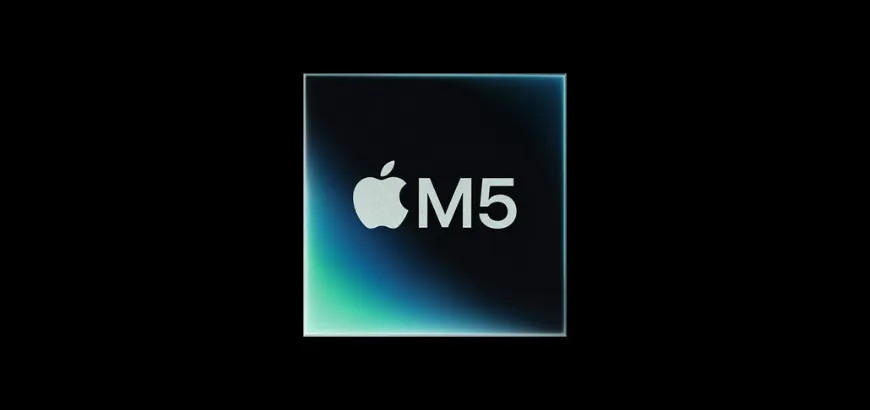
Rather than focusing only on conventional CPU speed, Apple designed the M5 around the growing importance of artificial intelligence, advanced graphics, on-device processing, and power efficiency. Its upgraded architecture allows compatible devices to handle demanding AI models, professional creative applications, complex graphics, and everyday multitasking more effectively.
The M5 does not completely reinvent the products that use it. Instead, it strengthens their core capabilities. The new 14-inch MacBook Pro receives faster processing and storage, the iPad Pro becomes a more capable portable creative workstation, and Vision Pro gains improved display rendering, responsiveness, and AI performance.
Here is a closer look at the Apple M5 chip and what it brings to each device.
The Apple M5 is a system-on-a-chip built using third-generation 3-nanometer manufacturing technology. It integrates the CPU, GPU, Neural Engine, media-processing hardware, and unified memory architecture within a single platform.
Its most notable change is a next-generation 10-core GPU architecture featuring a Neural Accelerator in every GPU core. These accelerators are designed to improve tasks involving generative AI, machine learning, image generation, video enhancement, and large language models.
According to Apple’s official M5 announcement, the chip delivers more than four times the peak GPU compute performance for AI workloads compared with the M4. Apple also claims up to 45% higher graphics performance and up to 15% faster multithreaded CPU performance than the previous generation.
Actual results will vary depending on the application, device configuration, workload, and software optimization. However, the architectural changes indicate that Apple is preparing its hardware for a future in which AI processing becomes part of everyday computing.
Apple M5 Chip Specifications at a Glance
The principal features of the base Apple M5 include:
- Up to a 10-core CPU
- Six efficiency cores and up to four high-performance cores
- Next-generation 10-core GPU
- A Neural Accelerator in every GPU core
- Third-generation hardware-accelerated ray tracing
- Improved 16-core Neural Engine
- 153GB/s unified memory bandwidth
- Advanced media engine
- Hardware acceleration for H.264, HEVC, ProRes and ProRes RAW
- AV1 video decoding
- Support for demanding on-device AI workloads
Unified memory bandwidth has increased by nearly 30% compared with M4, reaching 153GB/s. This allows different parts of the chip to access data more quickly and makes it possible to work with larger AI models, complex visual assets, and high-resolution media without relying as heavily on cloud processing.
Why the M5 Is Important for Artificial Intelligence
AI performance is the main theme of the M5 generation. Earlier Apple silicon chips already included a Neural Engine, but M5 expands AI acceleration directly into its GPU architecture.
Each GPU core now contains a dedicated Neural Accelerator. This enables the GPU to process highly parallel AI workloads more efficiently. Applications can use these resources for tasks such as:
- Generating images from text prompts
- Running large language models locally
- Improving video resolution
- Removing or masking objects in video
- Creating real-time visual effects
- Processing machine-learning models
- Enhancing photos
- Analysing large datasets
Running these processes on the device can offer several advantages. It may reduce dependence on an internet connection, improve response times, and keep more information on the user’s hardware instead of sending it to a remote server.
However, performance still depends on whether developers optimise their applications for Apple silicon and its available AI frameworks.
14-inch MacBook Pro with M5
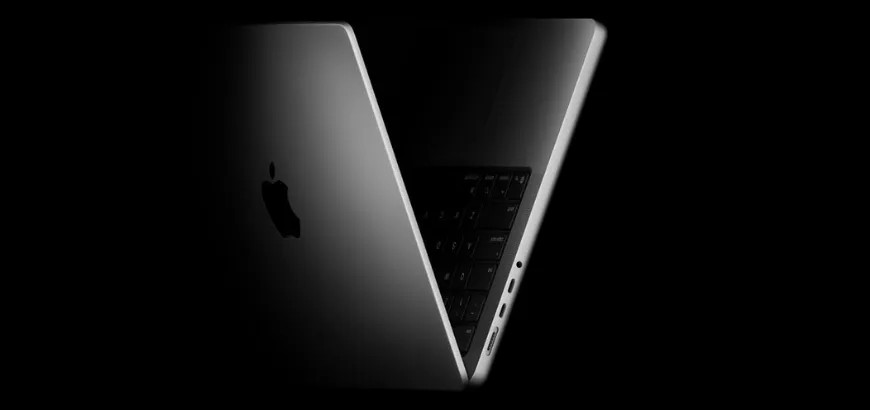
The new 14-inch MacBook Pro is the most traditional computer among the first M5-powered devices. It retains the established MacBook Pro design while gaining meaningful improvements in AI, graphics, storage, and general system performance.
Apple says the M5 model provides up to 3.5 times faster AI performance than the previous M4 version. Its next-generation GPU also delivers up to 1.6 times faster graphics performance in professional applications and up to 1.6 times higher frame rates in supported games.
The CPU improvement is more moderate but still valuable. Apple claims that the 10-core CPU can provide up to 20% faster multithreaded performance than M4 in workloads such as compiling code. That can benefit developers, designers, engineers, video editors, analysts, and other users who regularly run demanding applications.
The performance claims are based on Apple’s controlled testing, so users should not expect every application to show the same improvement. Nevertheless, the M5 offers a stronger foundation for professional and AI-assisted workflows.
Faster Storage and Expanded Capacity
Storage performance is another important upgrade. The M5 MacBook Pro offers up to twice the SSD performance of the previous generation for certain tasks.
Faster storage can improve:
- Application loading
- Large file transfers
- RAW photo imports
- High-resolution video exports
- Local AI model loading
- Project and media library access
Buyers can configure the 14-inch MacBook Pro with up to 4TB of storage, making it suitable for professionals working with large video projects, development environments, photography libraries, or local datasets.
Display, Camera and Battery Life
The laptop retains the 14-inch Liquid Retina XDR display, with an optional nano-texture finish for users who work in brightly lit environments. It also includes a 12MP Center Stage camera, six-speaker sound system, and a broad selection of ports.
Apple advertises up to 24 hours of battery life, although real-world results depend on screen brightness, applications, connectivity, and workload.
The M5 14-inch MacBook Pro launched in space black and silver, with an original US starting price of $1,599. Apple made it available beginning October 22, 2025. Apple’s MacBook Pro announcement provides the complete launch details.
iPad Pro with M5
The iPad Pro already offered substantial performance in a thin and lightweight design. The M5 generation increases that power while adding faster connectivity, storage, and memory.
The M5 iPad Pro is available in 11-inch and 13-inch sizes. Both use an Ultra Retina XDR display based on tandem OLED technology, delivering deep blacks, high contrast, and strong brightness performance.
Apple claims AI performance is up to 3.5 times faster than the M4 iPad Pro and up to 5.6 times faster than the M1 model. The improvement is particularly relevant for creative and AI-supported applications.
Potential use cases include:
- AI image generation
- Video masking and object selection
- 3D rendering
- Digital illustration
- Photo editing
- Video transcoding
- Architectural visualisation
- Gaming with ray-traced graphics
Graphics and Creative Performance
The third-generation ray-tracing engine enables more realistic lighting, shadows, and reflections in compatible applications and games.
According to Apple’s M5 iPad Pro announcement, the device offers up to 1.5 times faster 3D rendering with ray tracing than the M4 model. Apple also reports up to twice the AI image-generation performance in Draw Things and up to 2.3 times faster AI video upscaling in DaVinci Resolve compared with M4.
These results make the iPad Pro increasingly attractive to digital artists, designers, video creators, architects, and other professionals who want a portable device without giving up high-end processing power.
More Memory and Faster Storage
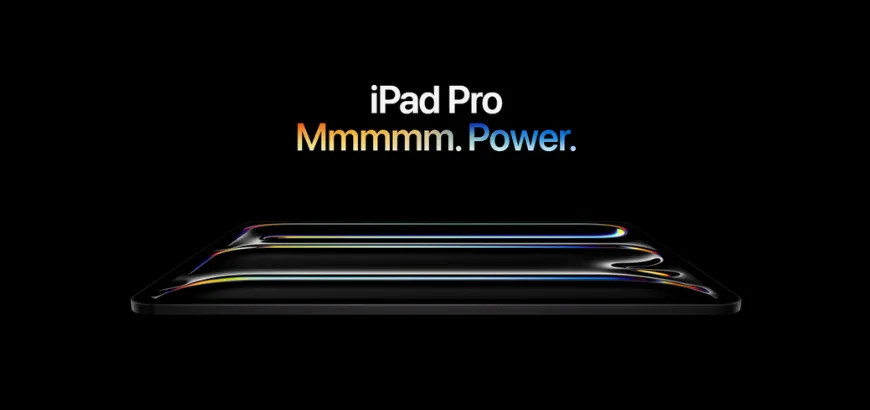
The 256GB and 512GB iPad Pro models start with 12GB of unified memory, which is 50% more than their previous-generation equivalents. The device also offers up to twice the storage read and write performance.
Combined with more than 150GB/s of unified memory bandwidth, these changes allow smoother multitasking and faster access to large files.
The M5 iPad Pro also supports fast charging. With a compatible high-wattage USB-C adapter, Apple says it can reach approximately 50% charge in around 30 minutes.
Wi-Fi 7 and Improved Cellular Performance
Apple introduced its N1 wireless networking chip in the M5 iPad Pro, enabling Wi-Fi 7 support. Cellular models also use the Apple-designed C1X modem, which is claimed to provide up to 50% faster cellular data performance while improving efficiency compared with the previous-generation cellular model.
These improvements are valuable for professionals who regularly upload large files, attend online meetings, access cloud-based projects, or work away from a traditional office.
Apple Vision Pro with M5
The upgraded Apple Vision Pro demonstrates how M5 can improve spatial computing. The device continues to use the dedicated R1 chip for processing information from its cameras, sensors, and microphones, while M5 manages system performance, graphics, AI tasks, and application processing.
Apple says the new Vision Pro renders 10% more pixels on its micro-OLED displays than the previous model. This should produce sharper text and more detailed visuals.
The display can also operate at up to 120Hz, helping reduce motion blur when users look at their surroundings and providing a smoother Mac Virtual Display experience.
Faster AI and Spatial Experiences
The improved 16-core Neural Engine accelerates AI-powered system features such as creating a Persona and converting photos into spatial scenes.
According to Apple’s Vision Pro M5 announcement, some system-level AI features are up to 50% faster, while supported third-party applications can achieve up to twice the AI performance of the previous generation.
These improvements could make Vision Pro more useful in professional fields such as:
- Product visualisation
- Medical training
- Engineering
- Architecture
- Collaborative design
- Education
- Immersive entertainment
Improved Comfort and Battery Life
The M5 Vision Pro comes with a new Dual Knit Band. It uses upper and lower straps designed to improve cushioning, breathability, adjustment, and weight distribution.
Battery life is rated for up to two and a half hours of general use or up to three hours of video playback. Users can continue operating the headset for longer periods by connecting its battery to a power source.
M5 Across Three Different Product Categories
The M5 chip performs a different role in each product.
| Device | Main M5 Advantage | Best Suited For |
|---|---|---|
| 14-inch MacBook Pro | Faster AI, graphics, CPU and SSD performance | Developers, editors, designers and professionals |
| iPad Pro | Portable creative performance and improved connectivity | Artists, students, creators and mobile professionals |
| Apple Vision Pro | Better display rendering and spatial AI | Spatial computing, enterprise and immersive media |
This approach demonstrates one of Apple silicon’s main advantages: the company can adapt a shared chip architecture across several product categories while optimising each device for a different user experience.
Should You Upgrade to an M5 Device?
An M5 device is most appealing to users who regularly work with AI applications, 3D graphics, professional video, software development, or complex creative projects.
Owners of older M1 or Intel-based Macs may experience a substantial improvement by upgrading to an M5 MacBook Pro. M1 iPad Pro users may also notice meaningful changes in rendering, memory, AI processing, and connectivity.
The decision is less straightforward for M4 users. The M5 offers measurable performance improvements, but normal activities such as web browsing, document editing, streaming, and email may not feel dramatically different.
Before upgrading, consider:
- Your current device and its performance
- The applications you use
- Whether those applications support M5 acceleration
- Required storage and memory
- Battery condition of your current device
- The total upgrade cost
- Whether AI or graphics performance matters to your workflow

Grow Your Business with Smarter Marketing
Join Our Free Digital Marketing Newsletter
Get practical tips on Facebook Ads, Google Ads, SEO, CRO, and business growth delivered straight to your inbox. No spam—only useful marketing insights.