 Aug 12, 2026 - 0
Minutes read
Aug 12, 2026 - 0
Minutes read
What Is a Smartwatch? Features, Benefits, Types & Buying Guide
Why Smartwatches Are Useful in Everyday Life
Learn how they work, what types are available, and how to choose the best one for your lifestyle and budget.
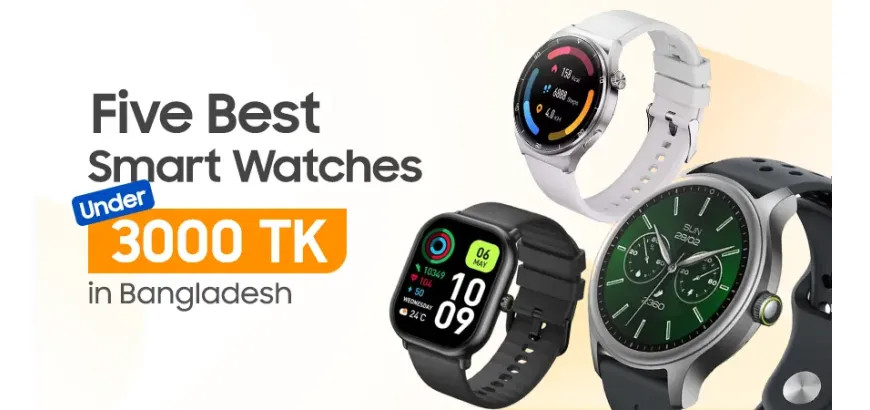
A smartwatch is a wearable device worn on the wrist that combines traditional timekeeping with smartphone-like features such as fitness tracking, notifications, GPS, and health monitoring. Modern smartwatches connect to your phone via Bluetooth or cellular networks and can run third-party apps.
You bought a new watch, but now it's also tracking your heart rate, buzzing with text messages, and reminding you to stand up. That's the reality of smartwatches today—and for many people, it raises a simple question: do I actually need one? With so many models, price points, and features on the market, it's easy to feel overwhelmed before you've even started.
This guide breaks it all down in plain language. By the end, you'll know exactly how smartwatches work, what types are available, and how to pick the right one for your lifestyle—whether you're a fitness enthusiast, a busy professional, or shopping for your child's first wearable.
Why Smartwatches Are Useful in Everyday Life
Smartwatches have quietly become one of the most practical gadgets people wear. The convenience isn't just about checking the time—it's about reducing how often you need to pull out your phone.
What everyday tasks can a smartwatch help with?
Here's where smartwatches genuinely shine in daily routines:
- Notifications at a glance: See incoming calls, texts, emails, and app alerts without reaching for your phone. This is particularly useful during meetings, workouts, or commutes.
- Health monitoring: Most modern smartwatches track heart rate, blood oxygen levels (SpO2), sleep quality, and step counts around the clock. Some models, like the Apple Watch Series 9 and Samsung Galaxy Watch 6, include ECG (electrocardiogram) functionality.
- Navigation: Built-in GPS means turn-by-turn directions appear on your wrist—no need to hold your phone while walking or cycling.
- Contactless payments: Services like Google Pay and Apple Pay allow you to tap your watch at checkout, leaving your wallet in your pocket.
- Voice assistants: Siri, Google Assistant, and Alexa are accessible directly from your wrist, making quick tasks like setting timers or sending messages hands-free.
The cumulative effect is a device that reduces friction across your day. Small interruptions—like checking your phone for a notification that turns out to be irrelevant—add up. A smartwatch filters that noise and delivers only what matters, right when you need it.
How a Smartwatch Works (Step-by-Step)
Understanding the mechanics of a smartwatch helps you make a smarter buying decision. Here's how these devices function from the moment you put one on.
Step 1: Sensors collect data
The underside of most smartwatches contains an array of sensors. An optical heart rate sensor uses light to measure blood flow through your wrist. An accelerometer detects movement and orientation. A GPS receiver (built-in or assisted via your phone) logs location data. Some models also include a gyroscope, barometer, and skin temperature sensor.
Step 2: The processor interprets the data
A low-power processor—similar in concept to a smartphone chip but optimized for battery efficiency—handles incoming sensor data in real time. Apple uses its proprietary S-series chips in Apple Watch models; Wear OS watches from Google typically use Qualcomm Snapdragon chips.
Step 3: The watch syncs with your smartphone
Most smartwatches connect to a paired smartphone via Bluetooth (typically Bluetooth 5.0 or higher). This connection allows the watch to mirror notifications, sync health data to apps like Apple Health or Google Fit, and access the internet through your phone's data connection. Cellular-enabled models include their own eSIM, so they can work independently of a phone.
Step 4: You interact through the display or voice
Touchscreens (AMOLED or LCD), physical buttons, rotating crowns, and voice commands all serve as input methods. Most smartwatches run a dedicated operating system—watchOS (Apple), Wear OS (Google), Tizen (Samsung's older models), or proprietary systems used by Garmin and Fitbit.
Step 5: Data is stored and analyzed
Health and activity data is stored locally on the device and synced to companion apps during charging or when connected to Wi-Fi. Over time, these apps build a picture of your health trends, sleep patterns, and fitness progress.
Different Types of Smartwatches: Fitness, Lifestyle, Outdoor, and Kids' Models
Not all smartwatches are built for the same person. Here's a breakdown of the main categories and who each one suits best.
Fitness-focused smartwatches
Brands like Garmin, Fitbit, and Polar specialize in fitness tracking. These devices typically offer advanced workout metrics—VO2 max estimates, recovery time recommendations, running dynamics, and sport-specific modes for swimming, cycling, and trail running. Battery life is often a priority; Garmin's Forerunner series can last up to two weeks on a single charge. Choose a fitness smartwatch if accurate athletic performance data matters more to you than app ecosystems or style.
Lifestyle and everyday smartwatches
Apple Watch and Samsung Galaxy Watch dominate this category. These devices balance health tracking with a polished user experience, broad app support, and premium design. The Apple Watch Ultra 2, for example, starts at $799 and targets users who want both sophisticated aesthetics and rugged functionality. Choose a lifestyle smartwatch if seamless smartphone integration and a broad feature set are your priorities.
Outdoor and adventure smartwatches
Casio G-Shock smartwatches and Garmin's Fenix series are built for harsh conditions—extreme temperatures, high altitudes, and underwater pressure. They tend to feature solar charging, long battery life, topographic maps, and military-grade durability ratings. Choose an outdoor smartwatch if you frequently hike, climb, or operate in environments where a standard device would fail.
Kids' smartwatches
Devices like the Garmin Vivofit Jr. and VTech Kidizoom are designed with parental controls, GPS location tracking, and simplified interfaces. They typically lack social media access and include features like chore trackers and step-count games. Choose a kids' smartwatch if safety features and parental monitoring are the deciding factors.
How to Choose the Right Smartwatch for Your Needs
With hundreds of models available, narrowing down the right smartwatch comes down to five key questions.
1. What smartphone do you use?
Compatibility matters. Apple Watch works exclusively with iPhones and runs watchOS. Wear OS watches pair best with Android devices. Samsung Galaxy Watch models support both platforms, though features are reduced on iPhone. Before purchasing, confirm the watch is compatible with your phone's operating system.
2. What will you primarily use it for?
Define your main use case first. If it's fitness, prioritize GPS accuracy and sensor quality. If it's productivity, focus on app availability and notification management. If it's health monitoring, look for FDA-cleared sensors like ECG and blood oxygen tracking.
3. How important is battery life?
Smartwatches vary widely here. The Apple Watch Series 9 lasts approximately 18 hours. Garmin's Instinct 2 Solar can run for months with solar charging. If you're unwilling to charge daily, lean toward fitness-focused or outdoor brands.
4. What is your budget?
Entry-level smartwatches from brands like Amazfit and Fossil start around $80–$150. Mid-range options (Samsung Galaxy Watch 6, Pixel Watch 2) sit between $250–$400. Premium models like Apple Watch Ultra 2 and Garmin Epix Pro exceed $600. Spending more generally delivers better build quality, more accurate sensors, and longer software support.
5. Does design matter to you?
Some people wear smartwatches as fashion accessories; others treat them purely as tools. Consider strap materials (silicone, leather, metal), case size (typically 40mm–49mm), and whether the brand offers customization options. A watch you enjoy wearing is one you'll actually use consistently.
The Smart Move: Finding Your Perfect Wristbound Companion
Smartwatches have evolved from novelty gadgets into genuinely useful tools that fit into nearly every lifestyle. The best one isn't the most expensive or the most feature-packed—it's the one that solves your specific problems without complicating your routine.
Start by identifying your primary need: fitness tracking, health monitoring, productivity, or safety. Then match that need to a compatible, well-reviewed model within your budget. Most major brands offer a 30-day return window, so you can test the device in real conditions before committing.
Technology moves fast, but the core promise of a smartwatch stays the same: put the right information on your wrist, at the right time, without making life more complicated than it needs to be.
Frequently Asked Questions
What can a smartwatch do?
A smartwatch can display notifications, track health metrics, monitor workouts, provide GPS navigation, enable contactless payments, and run third-party apps. Most models also include features like an alarm, timer, weather updates, and voice assistant access. The exact feature set depends on the brand and model—premium devices like Apple Watch Series 9 and Garmin Fenix 7 offer significantly more capabilities than budget alternatives.
Can a smartwatch work without a smartphone?
Yes, but with limitations. Cellular-enabled smartwatches can make calls, send messages, and stream music independently using their own eSIM and data plan. However, most smartwatches still require an initial setup with a smartphone and rely on a paired phone for full functionality, including app downloads and detailed health data syncing. If phone-free use is important to you, look specifically for models with built-in cellular connectivity.
How long does a smartwatch battery last?
Battery life varies significantly by model and usage. Apple Watch typically lasts 18–36 hours; Samsung Galaxy Watch manages 40–60 hours; Garmin fitness watches can last 2–4 weeks or longer with GPS turned off. Heavy use of GPS, always-on displays, and streaming will drain the battery faster. A helpful tip: enable battery saver mode during sleep tracking to preserve charge overnight without sacrificing data.
Are smartwatches accurate for fitness tracking?
Smartwatches are reasonably accurate for general fitness tracking, but precision varies by metric. Step counting and heart rate monitoring are generally reliable for everyday use. GPS accuracy depends on chip quality—dedicated fitness brands like Garmin typically outperform general-purpose smartwatches here. For clinical-grade health data, always consult a medical professional; smartwatch readings are useful for trend monitoring, not medical diagnosis.
Which smartwatch is best for beginners?
The Apple Watch SE (2nd generation) or Samsung Galaxy Watch FE are strong starting points for beginners. Both offer a clean interface, reliable health tracking, and good smartphone integration at a more accessible price point than flagship models. If you're on Android, the Galaxy Watch FE is a practical first choice; iPhone users will get the most seamless experience with any Apple Watch model.